“Reminder: Memory replacement is the first step toward rank privileges.”
Memory is one of the main pillars of identity. It endows humans with learned experience, uplifting them from simple animals who operate on instinct into more fleshed out characters. Take it away, and the person is but only a static being in this plane of existence with no sense of self-identity. Although memory erasure is a fascinating area of study, it will be forever relegated to the bookshelf of impractical ideas. A human which can neither form nor keep memories offers little benefit to the clandestine with no reduction to the cost of maintaining life. Put simply, a dead human is more useful than an amnesiac. A much more interesting question, one that inhabits the minds of every despot, is the way memories can be used as a weapon. If one can somehow replace a person’s memories, then they can effectively control that person’s identity.
The Combine start with knowledge of the old world first. This is easier for the young, those born just before or after the Combine’s arrival on Earth. The old pose a challenge on this front, but none can truly withstand the will of the Combine.
After this, new memories take the place of the old ones. The Combine have always been on Earth, they say, serving as humanity’s benefactors committed to seeing the species ascend from their meager existence. The Lambda Resistance are a new threat to humanity, with the heroic Civil Protection and Overwatch Transhuman Arm serving as the first line of defense against them. The Combine then say that the subject admired the heroics of the MPF or the glory of the OTA, or perhaps they became infatuated with the transhuman concept of immortality.
The subject is told that they were patriotic and proud of humanity’s benefactors before joining the ranks of the Combine. All of this forms a robust new identity. One that prioritizes the continued reign of the Combine and a willingness to put one’s life on the table in order to defend it.
Of course, such extensive memory replacement must be maintained through proper reinforcement. Charismatic leaders like the soft-spoken Earth Administrator Wallace Breen or the rallying cry of some Combine officers who lead from the front affirm the new memories of the subject. It is no wonder that very few Combine ever defect to the Resistance, and that such a debacle like the Razor Defection occurred only once.
Despite the power of the Combine’s brainwashing technology, it is not an entirely infallible procedure. Despite War Machine’s memory replacement, there is one thing that he remembers after having sat in a jail cell for over two years, separated from all the reinforcement that the Combine used to maintain their narrative: a symbol. He does not remember its origins, but he knows the symbol is from a long time ago. The symbol is dumbfoundingly simple in design: a rectangle of three colored bands running horizontally across and parallel to one another; the top band is colored black while the bottom is yellow, with the red middle band separating them. War Machine struggles to remember what the symbol represented. The last time he remembers seeing it was on the arm of a blue uniform…a bloody blue uniform.
This memory ensnares War Machine’s mind, forcing him to relive it over and over again. More sensory information returns from the ether, sounds and smells. Screams underlay a roar of gunfire and explosions. Tanks crank across asphalt only to be blown up the moment they fire their cannons. Oil burns, releasing a choking cocktail of noxious gasses high into the sky. Infantry rush forward and are gunned down to the last man. The hum of helicopters overhead and their subsequent boom as they are quickly shot down. An all too familiar sound of a strider cannon charging and firing. Buildings topple in on themselves as war crashes down upon them. This is the scene of a civilization collapsing under the boot of an unstoppable force.
War Machine returns to the subject of the bloody blue uniform as his senses refocus on his present position. He lays still atop a layer of asphalt, staring at the corpse of what appears to be a police officer.
“Friend?” War Machine thought. His memories could give him no such knowledge. He slowly gets up, struggling to balance himself. At his hip is a sidearm, which he pulls from its holster. He is out in the open, but there are no immediate threats nearby. War Machine moves into a building next to the street. The two story shophouse is scarred by the war surrounding it; a hole in its roof smolders. Its interior is partly burning, but the fire appears to be dying. War Machine knows he can not stay for long. Yet, he wonders where he can go. Even inside the precarious shop that he has taken refuge in, the war outside still overwhelms any peace the confines of momentary safety could provide. Among the explosions and gunfire, one sound stands out: the thumping of an approaching strider.
War Machine takes cover behind a cashier counter. The strider gradually gets closer to the shop. At the other end of the street, a tank with several squads of infantry move forward to confront the strider. A fire fight ensues, with a shell zooming past the shophouse and hitting the strider in a direct hit, causing the building to shudder. Rockets from the infantry go flying toward the strider, dealing more damage. Despite the good show of force, the strider remains standing, and its powerful cannon charges and fires, shattering the strength the human force had.
War Machine finds a backdoor out of the building. As he runs away, he briefly looks back and catches the strider in his sight for the first time. Its towering and foreboding presence is a symbol of the inevitable for humanity. At this point, War Machine tries to find what little safety he can grasp on to as he passes through buildings and streets. Eventually, he takes a wrong turn and is almost pierced by the bullet of a synthetic soldier. He dives into cover, crossfire zooming just above him as a squad of humans and synth soldiers shoot their way to victory. War Machine raises his sidearm and attempts to shoot at the alien force. 9mm does little to these specially designed synth soldiers of the Combine army. Soon, War Machine’s clip runs dry, and with no more ammo to spare, he is forced to flee from the advancing synths. Their bullets zip past, some nearly grazing him. He manages to evade their line of fire, taking cover in another building.
In War Machine’s company is a soldier on the throes of death, several holes in his body serve as outlets for the draining of all his blood. War Machine tries to assist as much as he can, but with little equipment, the man is too far gone. The soldier’s radio crackles to life, announcing the withdrawal of military assets from the city. In the message, the officer divulges a rendezvous point to regroup. Seeing this opportunity to escape from the chaos engulfing the city, War Machine makes his way toward it as quickly as he can, dodging detection by the forces of the Combine.
In a few more hours, humanity, represented by Dr. Wallace Breen, will formally capitulate to the overwhelming power of the Combine, thus beginning a new, dark chapter of the species’s history.
The following years saw War Machine, much like most other humans, hauled off to newly-erected urban centers, safe havens from the Xenian infestation that had grown since their initial introduction to Earth during the portal storms. Also like most humans, the Combine never allowed War Machine to stay in one city for more than a year. Many excuses were given for such transfers, sometimes none at all. In each city, War Machine found work in the various labor teams organized by the Civil Workers Union. Unlike him, CWU members and other loyalists were exempted from the frequent transfers.
For two decades, War Machine lived his life this way: working among the labor teams and collecting ration tokens as payment, all while adjusting to each new city. The work varied over the years, from factory production to maintaining citizen housing. Sometimes, War Machine would find himself among an unlucky few tasked with clearing out Xenian infestations. These clean up jobs were so dangerous one might have come to believe that they were a form of execution. Of course, loyalists and Civil Protection almost never took on such jobs unless absolutely necessary.
When The Uprising occurred in City 17, the other cities began to fear its ramifications on their own civilian populace. Most of those fears were well founded. As a result, the Combine occupation, now under the administration of the Planetary Commander following Dr. Breen’s supposed death, opted to restructure Civil Protection into a much more militarized fighting force.
New subdivisions were formed under Civil Protection, each with their own specialized purpose. Unlike before the Uprising, where some Civil Protection officers were simply designated as medics along with their other duties, officers now became dedicated medics organized under HELIX. In the same way, Civil Protection’s designated engineers were organized into a subdivision called GRID. Anticipating the use of armored vehicles and fortifications by the Lambda Resistance, the Combine formed BALLISTA, equipped with RPGs and other explosive devices to disable them. When reconnaissance became essential for combat operations, the Combine formed CROSS, a vertical mobile unit equipped with a DMR. Controversially, a few Civil Protection officers were granted one of the Combine’s most advanced technologies and became organized under MACE.
With these new subdivisions and better, more advanced weaponry, the cherry on top for this new Civil Protection was a name change: Metro Police Force. As well, their mission also changed from simply beating the civilian populace into submission to defending the Cities from anti-civil infection both domestic and abroad. More subdivisions formed and disbanded within the MPF over the course of the war. Eventually, due to concerns about the workload of the MPF DvL (and the outsized influence they possessed), the MPF was split in half, with MACE and CROSS forming their own division: Metro Special Operations.
War Machine inhabited City 43 when the Uprising came, and had become subject to one of the most proactive anti-civil suppression measures taken by any City: drastically reduce the rations of citizens so they are forced to become a loyalist or join the Combine military. Unable to endure the crippling effects of severe malnutrition, War Machine, like most other citizens, caved to the ultimate demands of the City administration. Upon enlisting in the MPF, War Machine became a lowly UNION 09, his callsign christened “3217”.
Even though he reluctantly acquiesced to the desires of City 43, his new position was still wrought with as many problems as his previous one. UNIONs in general, and 09s specifically, were utilized as grunts for the defense of the City. They were bodies to be thrown at any annoying problem the Civil Administrator saw, even if the bodies were not well trained or equipped to deal with it.
Perhaps unsurprisingly, the proactiveness of City 43’s administration eventually came back to bite them in the long term. The remaining citizens that still refused to become loyalists had begun to organize. The Lambda Resistance took advantage of the growing instability by funneling food, weapons, and undercover agents into the City. Bolstered by this support, the City soon descended into rioting and chaos. Warehouses were raided and ration crates seized. Rioters broke into CWU apartments and work facilities, stealing whatever they could while assaulting any loyalists in their path. The Civil Administrator quickly authorized a Judgement Waiver, allowing the MPF to better deal with the crisis while under the support of Overwatch’s transhuman assets.
Like many of the civil administration’s problems, UNIONs were sent to the very front of the frontlines. Although equipped with military grade weapons, most UNIONs lacked quality training, with the sheer mass and morale of the rioters overpowering most UNIONs’ will to fight. In only a couple weeks, the Combine lost control of several sections of the City. In these areas of total anarchy, full fledged Resistance fighters poured into the city and engaged the forces of the Overwatch. The Civil Administrator almost resorted to authorizing Autonomous Judgement but was personally deposed by the Planetary Commander, who saw them as incompetent.
Three months would go by until the Combine eventually deemed City 43 a lost cause, withdrawing whatever assets they had left and executing a shelling campaign to kill as many Resistance fighters as possible. War Machine had survived the hell of the City, and found himself transferred to a much more stable City 24. While there, War Machine received much better training and became acquainted with several members of the newly formed BALLISTA subdivision. Although he found himself transferred again not long after his arrival in the City, the impression of BALLISTA gained by War Machine would catalyze his decision to join the subdivision months later.
“War Machine?” the prosecutor probes after a long moment of silence from War Machine.
“Huh?” War Machine comes to. His thoughts had brought him out of the reality of his present situation. Questioning had been progressing for nearly half an hour at this point, a fact that had begun to take a toll on War Machine as he dug into his subconscious and unearthed his long-suppressed memories.
“Was it a long night?”
“No…no Mr.–”
“Serry,” the prosecutor interrupts.
“Serry. I was just lost in my own thoughts.”
“Is that so? Are you thinking about the things you did that brought you here?”
“No.” War Machine eyes Serry inquisitively, trying to parse the prosecutor’s words.
Serry sneers at War Machine’s apparent ignorance, “Well, I think we shouldn’t waste anymore of this tribunal’s time with background information. What happened on April 24, 2026?”
War Machine again delves into his memories, searching for the images of that day as if he was cruising through a vast library.
“Do you need me to jog your memory, War Machine? You were in City 31 that day.” Serry’s tone grows increasingly conspiratorial.
“I remember being in City 31 throughout the winter of that year. A lot of things happened during that time.”
“Does Horus sound familiar? He was an officer in SHIELD.”
“I remember him, although I knew little about him.”
“Did you happen to hear about his recent execution?”
“I heard rumors about it, yes.”
“You know why he was condemned to such a fate?”
“No. How is this relevant?”
Serry scoffs, his frustration now evident. “Hundreds of innocent people were viciously murdered without any provocation because of him, and we have a credible intel that you were part of that massacre. So yes, War Machine, he is very relevant to your testimony. Are their deaths enough for you to remember, or are you gonna sit there and feign ignorance like the god damn coward you are?”
“Mr. Serry,” the centermost judge interjects, “as much as we understand emotions can run high in these hearings, this tribunal must be able to ascertain the facts of each defendant’s case. We will not tolerate altercations in this courtroom. Temper yourself Mr. Serry, and please continue extracting testimony.”
The prosecutor takes a deep breath, “I offer my sincerest apologies, your Honor.” He then turns toward War Machine, “So what happened on April 24, 2026?”
“Reminder: Memory replacement is the first step toward rank privileges.”
Memory is one of the main pillars of identity. It endows humans with learned experience, uplifting them from simple animals who operate on instinct into more fleshed out characters. Take it away, and the person is but only a static being in this plane of existence with no sense of self-identity. Although memory erasure is a fascinating area of study, it will be forever relegated to the bookshelf of impractical ideas. A human which can neither form nor keep memories offers little benefit to the clandestine with no reduction to the cost of maintaining life. Put simply, a dead human is more useful than an amnesiac. A much more interesting question, one that inhabits the minds of every despot, is the way memories can be used as a weapon. If one can somehow replace a person’s memories, then they can effectively control that person’s identity.
The Combine start with knowledge of the old world first. This is easier for the young, those born just before or after the Combine’s arrival on Earth. The old pose a challenge on this front, but none can truly withstand the will of the Combine.
After this, new memories take the place of the old ones. The Combine have always been on Earth, they say, serving as humanity’s benefactors committed to seeing the species ascend from their meager existence. The Lambda Resistance are a new threat to humanity, with the heroic Civil Protection and Overwatch Transhuman Arm serving as the first line of defense against them. The Combine then say that the subject admired the heroics of the MPF or the glory of the OTA, or perhaps they became infatuated with the transhuman concept of immortality.
The subject is told that they were patriotic and proud of humanity’s benefactors before joining the ranks of the Combine. All of this forms a robust new identity. One that prioritizes the continued reign of the Combine and a willingness to put one’s life on the table in order to defend it.
Of course, such extensive memory replacement must be maintained through proper reinforcement. Charismatic leaders like the soft-spoken Earth Administrator Wallace Breen or the rallying cry of some Combine officers who lead from the front affirm the new memories of the subject. It is no wonder that very few Combine ever defect to the Resistance, and that such a debacle like the Razor Defection occurred only once.
Despite the power of the Combine’s brainwashing technology, it is not an entirely infallible procedure. Despite War Machine’s memory replacement, there is one thing that he remembers after having sat in a jail cell for over two years, separated from all the reinforcement that the Combine used to maintain their narrative: a symbol. He does not remember its origins, but he knows the symbol is from a long time ago. The symbol is dumbfoundingly simple in design: a rectangle of three colored bands running horizontally across and parallel to one another; the top band is colored black while the bottom is yellow, with the red middle band separating them. War Machine struggles to remember what the symbol represented. The last time he remembers seeing it was on the arm of a blue uniform…a bloody blue uniform.
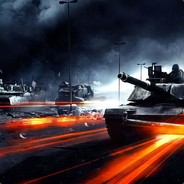
This memory ensnares War Machine’s mind, forcing him to relive it over and over again. More sensory information returns from the ether, sounds and smells. Screams underlay a roar of gunfire and explosions. Tanks crank across asphalt only to be blown up the moment they fire their cannons. Oil burns, releasing a choking cocktail of noxious gasses high into the sky. Infantry rush forward and are gunned down to the last man. The hum of helicopters overhead and their subsequent boom as they are quickly shot down. An all too familiar sound of a strider cannon charging and firing. Buildings topple in on themselves as war crashes down upon them. This is the scene of a civilization collapsing under the boot of an unstoppable force.
War Machine returns to the subject of the bloody blue uniform as his senses refocus on his present position. He lays still atop a layer of asphalt, staring at the corpse of what appears to be a police officer.
“Friend?” War Machine thought. His memories could give him no such knowledge. He slowly gets up, struggling to balance himself. At his hip is a sidearm, which he pulls from its holster. He is out in the open, but there are no immediate threats nearby. War Machine moves into a building next to the street. The two story shophouse is scarred by the war surrounding it; a hole in its roof smolders. Its interior is partly burning, but the fire appears to be dying. War Machine knows he can not stay for long. Yet, he wonders where he can go. Even inside the precarious shop that he has taken refuge in, the war outside still overwhelms any peace the confines of momentary safety could provide. Among the explosions and gunfire, one sound stands out: the thumping of an approaching strider.
War Machine takes cover behind a cashier counter. The strider gradually gets closer to the shop. At the other end of the street, a tank with several squads of infantry move forward to confront the strider. A fire fight ensues, with a shell zooming past the shophouse and hitting the strider in a direct hit, causing the building to shudder. Rockets from the infantry go flying toward the strider, dealing more damage. Despite the good show of force, the strider remains standing, and its powerful cannon charges and fires, shattering the strength the human force had.
War Machine finds a backdoor out of the building. As he runs away, he briefly looks back and catches the strider in his sight for the first time. Its towering and foreboding presence is a symbol of the inevitable for humanity. At this point, War Machine tries to find what little safety he can grasp on to as he passes through buildings and streets. Eventually, he takes a wrong turn and is almost pierced by the bullet of a synthetic soldier. He dives into cover, crossfire zooming just above him as a squad of humans and synth soldiers shoot their way to victory. War Machine raises his sidearm and attempts to shoot at the alien force. 9mm does little to these specially designed synth soldiers of the Combine army. Soon, War Machine’s clip runs dry, and with no more ammo to spare, he is forced to flee from the advancing synths. Their bullets zip past, some nearly grazing him. He manages to evade their line of fire, taking cover in another building.
In War Machine’s company is a soldier on the throes of death, several holes in his body serve as outlets for the draining of all his blood. War Machine tries to assist as much as he can, but with little equipment, the man is too far gone. The soldier’s radio crackles to life, announcing the withdrawal of military assets from the city. In the message, the officer divulges a rendezvous point to regroup. Seeing this opportunity to escape from the chaos engulfing the city, War Machine makes his way toward it as quickly as he can, dodging detection by the forces of the Combine.
In a few more hours, humanity, represented by Dr. Wallace Breen, will formally capitulate to the overwhelming power of the Combine, thus beginning a new, dark chapter of the species’s history.
The following years saw War Machine, much like most other humans, hauled off to newly-erected urban centers, safe havens from the Xenian infestation that had grown since their initial introduction to Earth during the portal storms. Also like most humans, the Combine never allowed War Machine to stay in one city for more than a year. Many excuses were given for such transfers, sometimes none at all. In each city, War Machine found work in the various labor teams organized by the Civil Workers Union. Unlike him, CWU members and other loyalists were exempted from the frequent transfers.
For two decades, War Machine lived his life this way: working among the labor teams and collecting ration tokens as payment, all while adjusting to each new city. The work varied over the years, from factory production to maintaining citizen housing. Sometimes, War Machine would find himself among an unlucky few tasked with clearing out Xenian infestations. These clean up jobs were so dangerous one might have come to believe that they were a form of execution. Of course, loyalists and Civil Protection almost never took on such jobs unless absolutely necessary.
When The Uprising occurred in City 17, the other cities began to fear its ramifications on their own civilian populace. Most of those fears were well founded. As a result, the Combine occupation, now under the administration of the Planetary Commander following Dr. Breen’s supposed death, opted to restructure Civil Protection into a much more militarized fighting force.
New subdivisions were formed under Civil Protection, each with their own specialized purpose. Unlike before the Uprising, where some Civil Protection officers were simply designated as medics along with their other duties, officers now became dedicated medics organized under HELIX. In the same way, Civil Protection’s designated engineers were organized into a subdivision called GRID. Anticipating the use of armored vehicles and fortifications by the Lambda Resistance, the Combine formed BALLISTA, equipped with RPGs and other explosive devices to disable them. When reconnaissance became essential for combat operations, the Combine formed CROSS, a vertical mobile unit equipped with a DMR. Controversially, a few Civil Protection officers were granted one of the Combine’s most advanced technologies and became organized under MACE.
With these new subdivisions and better, more advanced weaponry, the cherry on top for this new Civil Protection was a name change: Metro Police Force. As well, their mission also changed from simply beating the civilian populace into submission to defending the Cities from anti-civil infection both domestic and abroad. More subdivisions formed and disbanded within the MPF over the course of the war. Eventually, due to concerns about the workload of the MPF DvL (and the outsized influence they possessed), the MPF was split in half, with MACE and CROSS forming their own division: Metro Special Operations.
War Machine inhabited City 43 when the Uprising came, and had become subject to one of the most proactive anti-civil suppression measures taken by any City: drastically reduce the rations of citizens so they are forced to become a loyalist or join the Combine military. Unable to endure the crippling effects of severe malnutrition, War Machine, like most other citizens, caved to the ultimate demands of the City administration. Upon enlisting in the MPF, War Machine became a lowly UNION 09, his callsign christened “3217”.
Even though he reluctantly acquiesced to the desires of City 43, his new position was still wrought with as many problems as his previous one. UNIONs in general, and 09s specifically, were utilized as grunts for the defense of the City. They were bodies to be thrown at any annoying problem the Civil Administrator saw, even if the bodies were not well trained or equipped to deal with it.
Perhaps unsurprisingly, the proactiveness of City 43’s administration eventually came back to bite them in the long term. The remaining citizens that still refused to become loyalists had begun to organize. The Lambda Resistance took advantage of the growing instability by funneling food, weapons, and undercover agents into the City. Bolstered by this support, the City soon descended into rioting and chaos. Warehouses were raided and ration crates seized. Rioters broke into CWU apartments and work facilities, stealing whatever they could while assaulting any loyalists in their path. The Civil Administrator quickly authorized a Judgement Waiver, allowing the MPF to better deal with the crisis while under the support of Overwatch’s transhuman assets.
Like many of the civil administration’s problems, UNIONs were sent to the very front of the frontlines. Although equipped with military grade weapons, most UNIONs lacked quality training, with the sheer mass and morale of the rioters overpowering most UNIONs’ will to fight. In only a couple weeks, the Combine lost control of several sections of the City. In these areas of total anarchy, full fledged Resistance fighters poured into the city and engaged the forces of the Overwatch. The Civil Administrator almost resorted to authorizing Autonomous Judgement but was personally deposed by the Planetary Commander, who saw them as incompetent.
Three months would go by until the Combine eventually deemed City 43 a lost cause, withdrawing whatever assets they had left and executing a shelling campaign to kill as many Resistance fighters as possible. War Machine had survived the hell of the City, and found himself transferred to a much more stable City 24. While there, War Machine received much better training and became acquainted with several members of the newly formed BALLISTA subdivision. Although he found himself transferred again not long after his arrival in the City, the impression of BALLISTA gained by War Machine would catalyze his decision to join the subdivision months later.
“War Machine?” the prosecutor probes after a long moment of silence from War Machine.
“Huh?” War Machine comes to. His thoughts had brought him out of the reality of his present situation. Questioning had been progressing for nearly half an hour at this point, a fact that had begun to take a toll on War Machine as he dug into his subconscious and unearthed his long-suppressed memories.
“Was it a long night?”
“No…no Mr.–”
“Serry,” the prosecutor interrupts.
“Serry. I was just lost in my own thoughts.”
“Is that so? Are you thinking about the things you did that brought you here?”
“No.” War Machine eyes Serry inquisitively, trying to parse the prosecutor’s words.
Serry sneers at War Machine’s apparent ignorance, “Well, I think we shouldn’t waste anymore of this tribunal’s time with background information. What happened on April 24, 2026?”
War Machine again delves into his memories, searching for the images of that day as if he was cruising through a vast library.
“Do you need me to jog your memory, War Machine? You were in City 31 that day.” Serry’s tone grows increasingly conspiratorial.
“I remember being in City 31 throughout the winter of that year. A lot of things happened during that time.”
“Does Horus sound familiar? He was an officer in SHIELD.”
“I remember him, although I knew little about him.”
“Did you happen to hear about his recent execution?”
“I heard rumors about it, yes.”
“You know why he was condemned to such a fate?”
“No. How is this relevant?”
Serry scoffs, his frustration now evident. “Hundreds of innocent people were viciously murdered without any provocation because of him, and we have a credible intel that you were part of that massacre. So yes, War Machine, he is very relevant to your testimony. Are their deaths enough for you to remember, or are you gonna sit there and feign ignorance like the god damn coward you are?”
“Mr. Serry,” the centermost judge interjects, “as much as we understand emotions can run high in these hearings, this tribunal must be able to ascertain the facts of each defendant’s case. We will not tolerate altercations in this courtroom. Temper yourself Mr. Serry, and please continue extracting testimony.”
The prosecutor takes a deep breath, “I offer my sincerest apologies, your Honor.” He then turns toward War Machine, “So what happened on April 24, 2026?”